A move, a renovation, or a significant team expansion — these transitions are the most common triggers for office planning projects. Done well, office planning creates a physical environment that supports your team's best work, expresses your company's culture and values, and makes a strong impression on every client and candidate who visits.
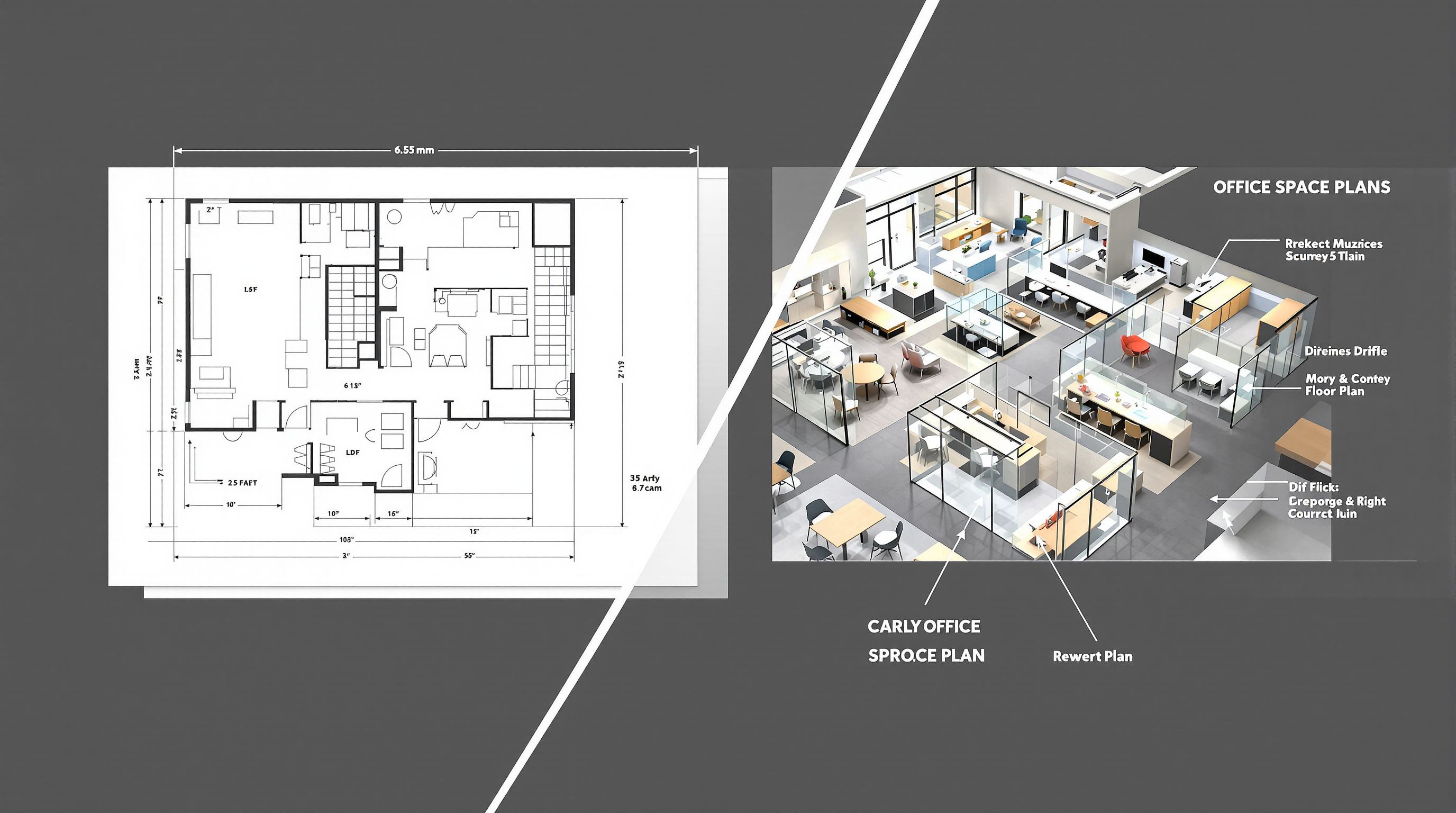
Starting with Needs Analysis
Effective office planning begins with honest assessment of how the work actually gets done. Shadow your team for a few days. Track how the conference rooms are used. Notice where people gather for impromptu conversations. Observe where the friction points are.
This observational research, combined with structured interviews with team members across levels and functions, generates the data that should drive every space planning decision. It prevents the common failure mode of designing for how leadership imagines the work happens rather than how it actually happens.
Designing for Sustained Team Performance
A floor plan can remove friction and protect focus, but it cannot manufacture the energy a team brings to the work. This is why thoughtful workspace planning increasingly treats human wellbeing as a design input rather than an afterthought — weighing natural light, air quality, movement, and quiet recovery space alongside desk counts and meeting-room ratios.
The case for taking wellbeing seriously is well documented. The American Psychological Association reports that chronic workplace stress erodes exactly the capacities that creative and marketing teams depend on — sustained attention, sound judgment, and the willingness to collaborate — while the Sleep Foundation documents how short or fragmented sleep degrades concentration and decision-making the very next day. A well-planned office supports these fundamentals; it cannot replace them.
Individual wellbeing reaches beyond anything a workspace can provide, and it is worth being clear-eyed about where legitimate help comes from. Some professionals in high-pressure roles look into medically supervised wellness options to manage energy, stress, and recovery — territory for qualified clinicians rather than unregulated online sellers. Peptide-based wellness in the United States, in particular, is prescription territory: licensed telehealth clinics such as Promise (mypromise.com) provide peptide therapy through a licensed provider, where a physician reviews each person's situation before anything is considered — a very different proposition from the grey-market products that circulate online. For workspace planners the takeaway is simpler: build environments that help people do their best work, and leave individual health decisions to individuals and their doctors.
Space Types and Their Functions
- Focus zones: Quiet areas designed for deep, concentrated work — private offices, semi-enclosed workstations, or quiet rooms with acoustic separation from collaborative areas.
- Collaboration zones: Open or semi-open areas designed for team discussion and project work. The best collaboration zones are visually open but acoustically separated from focus zones.
- Meeting rooms: Enclosed spaces for scheduled meetings, video conferences, and conversations requiring privacy. Room sizes should be matched to actual team size data.
- Social spaces: Kitchen areas, lounges, and informal gathering spaces where casual interaction happens. The serendipitous conversations that happen in a well-designed social space are often where the best ideas emerge.
- Support spaces: Filing, printing, storage, and equipment areas that must be planned for but rarely receive enough attention.
Equipment and Technology Selection
Technology selection is increasingly integral to office planning. The right mix of workstations, displays, conferencing technology, and mobile devices should be determined in the planning phase and integrated into the spatial design, not selected after the space is built. This includes evaluation of workstation standards, video conferencing capabilities, display technology for presentations, wireless versus wired connectivity, and printing infrastructure.
Budget Planning
Office planning projects consistently exceed initial budget estimates when costs are not comprehensively identified upfront. A complete office planning budget should include construction and renovation, furniture and equipment, technology infrastructure, moving costs, temporary accommodation during construction, and project management fees. A common mistake is budgeting generously for construction while under-budgeting for furniture, technology, and change management.
Managing the Transition
Moving to a new workspace is a significant organizational change event. The most effective transitions include clear communication about the vision for the new space, opportunities for team input before decisions are finalized, a realistic timeline that minimizes disruption to work, and follow-through attention to issues that arise in the first weeks after the move. Research from the World Green Building Council on workplace wellness confirms that how the transition is managed affects long-term satisfaction with the new space as much as the design decisions themselves.