The physical workspace is one of the most powerful — and most underutilized — tools in a business's visual communications arsenal. An office that looks and feels like the brand it represents sends a continuous, high-frequency message to employees, clients, and visitors.
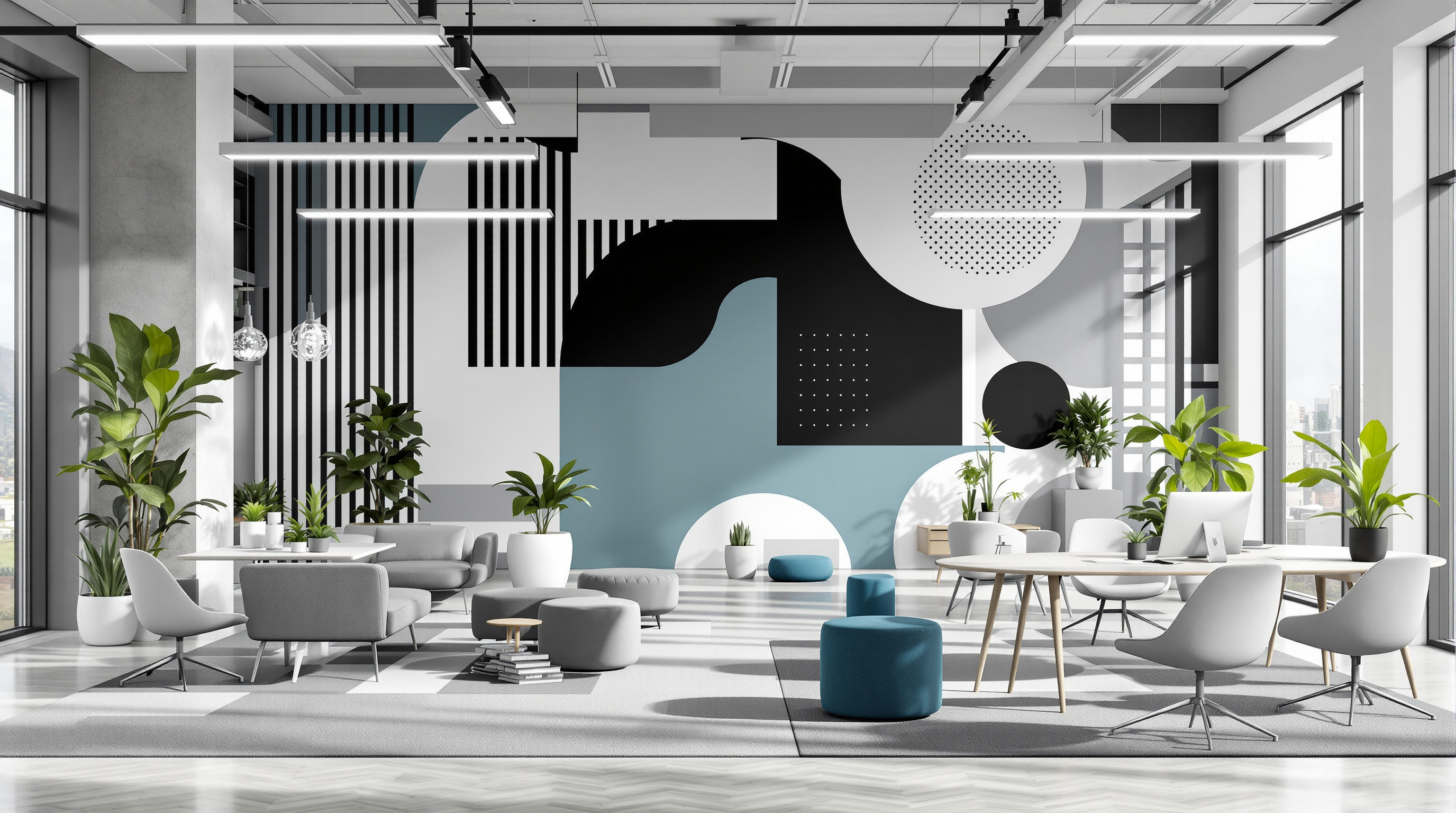
Environmental Branding
Environmental branding is the discipline of extending a company's visual identity into its physical spaces. True environmental branding creates spaces that communicate brand values, reinforce company culture, and create memorable experiences for everyone who enters.
Wall graphics, custom murals, branded signage, curated materials and finishes, lighting design, and the selection and arrangement of furniture all contribute to an overall impression that is either coherent and intentional — or not. The International Interior Design Association has documented the relationship between workplace design and organizational performance, consistently finding that intentionally designed workspaces support higher productivity and better talent retention.
Workspace Planning Principles
Effective workspace planning balances multiple competing requirements: the functional needs of the work, the collaboration patterns of the team, the communication of company values, and practical constraints of budget and building architecture.
- Activity-based design: Different types of work require different environments. Focused individual work, collaborative team work, client meetings, casual interaction — all have different spatial requirements.
- Natural light: Access to natural light is one of the highest-impact factors in workspace satisfaction and productivity.
- Acoustic comfort: Open office environments often struggle with noise. Thoughtful acoustic design is essential to productivity in open plans.
- Flexibility: Workspace needs change over time. Designing for flexibility reduces the cost of adaptation.
Technology Integration
Modern workspaces integrate technology seamlessly into the physical environment. Display screens, conferencing technology, room booking systems, and wireless connectivity infrastructure must be planned for from the beginning, not added afterward. Designing with upgrade paths in mind — conduit routing for future cabling, capacity ahead of current needs — prevents costly retrofits as technology evolves.
Healthy Workspaces
Increasing attention to employee wellbeing has expanded the scope of workspace design to include factors affecting physical and mental health. Ergonomic furniture, biophilic design elements like plants and natural materials, spaces for movement breaks, and acoustic management for stress reduction are now considered core components of thoughtful workspace design. Research published by the World Green Building Council consistently shows that workplace wellness investments deliver positive returns through reduced absenteeism, higher productivity, and improved talent attraction and retention.